 admin
admin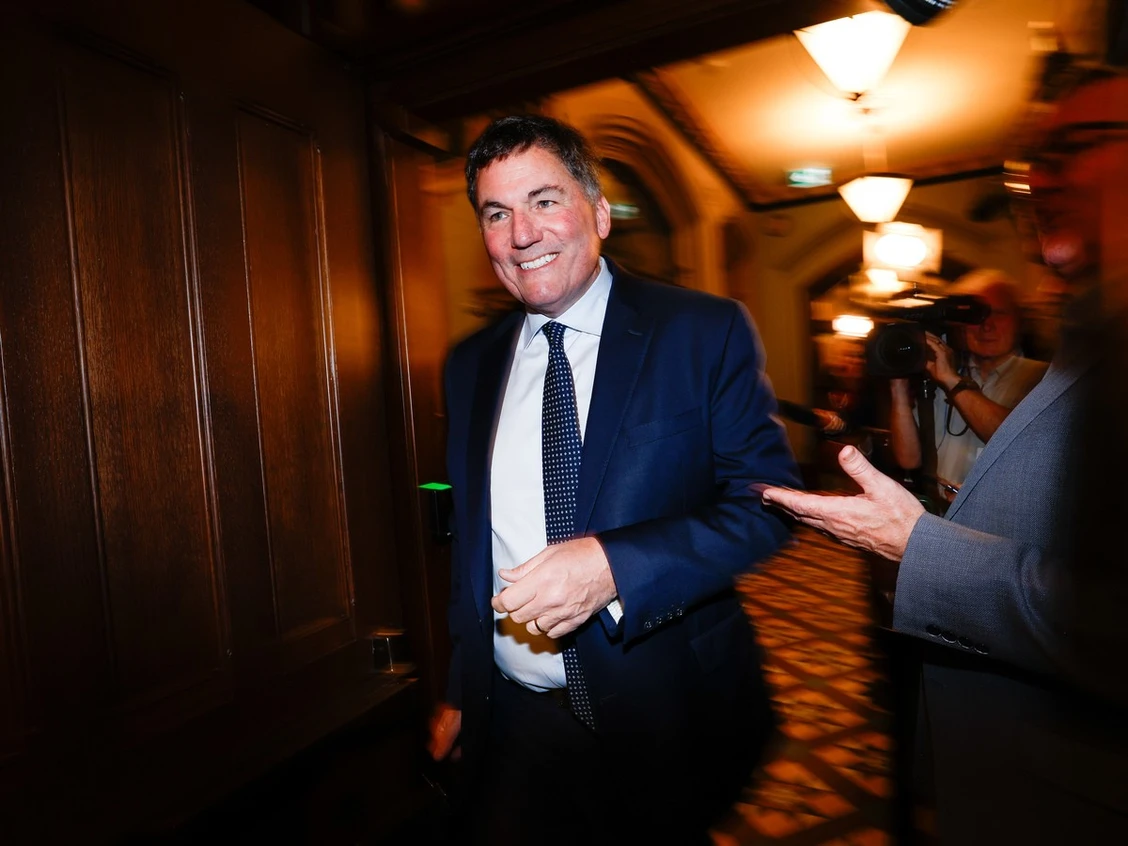
WASHINGTON, D.C. — Canada-U.S. Trade Minister Dominic LeBlanc said his trip to D.C. on Tuesday “has not been without some turbulence,” but that he remains optimistic that a trade deal with the Americans will be reached.
Article content
This week, Canada signalled that it wants to see the Canada-U.S.-Mexico Agreement (CUSMA) renewed for 16 years to preserve trade growth on the continent even as U.S. President Donald Trump renewed his calls to make Canada the “51st state” in a post shared to Truth Social.
Article content
Article content
Article content
LeBlanc and Canada’s chief trade negotiator Janice Charette arrived in Washington, D.C. on Tuesday, a day after LeBlanc’s office sent a letter to U.S. Trade Representative Jamieson Greer and his Mexican counterpart, Marcelo Ebrard, with Canada’s recommendations for CUSMA.
Article content
Article content
The letter said Canada would like to see the agreement renewed to sustain North American economic growth while pointing to the huge level of trilateral trade, which is reaching $1.9 trillion in 2026, a 32 per cent jump since CUSMA was created.
Article content
LeBlanc and Charette met with Greer, whose team held negotiations with the Mexican trade team last week and demanded a change to CUSMA’s rules of origin requirements. LeBlanc said the meeting with Greer was positive, although he refused several times to get into details when prompted by reporters.
Article content
“Sitting with Ambassador Greer at his office, we took the time to talk about specific issues on which Canada can propose, we think, measures that should give the Americans a lot of comfort,” said LeBlanc.
Article content
Just hours before the Canadian duo’s arrival in the U.S. capital, however, Trump posted his fiery reminder of his intentions on Truth Social: “51st State!” his post read, linking to a Bloomberg report about Canada’s technical recession. U.S. Ambassador to Canada Pete Hoekstra then shared the post on his X account this morning, hours before the LeBlanc-Charette-Greer meeting.
Article content
Article content
In response to a reporter’s question about expelling the U.S. ambassador, Prime Minister Mark Carney said that wasn’t on the table.
Article content
Read More
- There are major implications for Canada in upcoming Michigan and Wisconsin primaries
- Carney says ‘Canada Strong will help make America great again’ in conciliatory New York speech
Article content
“It’s an administration that we have to work with. It’s our biggest trading relationship. It’s our biggest security relationship,” said Carney, at a news conference in Montreal. “We take the administration as it is.”
Article content
Carney also defended his record on economic matters, saying his government was “laying the foundations” for a stronger Canadian economy.
Article content
“We see some weakness in part because of clear decisions by the government,” he told reporters in Ottawa, avoiding the term “recession”.
Article content
He pointed to the federal government’s rollback of immigration, which has impacted the country’s population growth, as well as the tightening of government spending.
Article content
“There’s some other choppiness in terms of how investment is happening, but we’re also seeing at the same time the foundations coming into place, settling in for that stronger, more resilient economy.”
Article content
When it comes to the pace of trade talks with the U.S. and the fact Mexico appears further along than Canada, Carney pointed to how the list of technical issues the Trump administration has with its southern neighbour is longer than its one with Canada.
Trending
- Is the Citizen restaurant critic out of touch with diners’ palates?
- Early retirement incentives to reduce department operating budgets
- Two new swimming docks coming to the Ottawa River this summer
- New Ottawa café makes decadent street food from Brazil
- Bank and Leitrim is a ‘mess’ and these residents can’t wait for its new design
Article content
He says Canada was focused on what Carney called “more fundamental structural issues” like the Section 232 tariffs Trump applied to steel and aluminum, as well as other levies charged on autos and forest products.
Article content
“We’re looking to determine whether there’s a possibility of a new partnership there.”
Article content
Ontario Premier Doug Ford also took the opportunity to renew his war of words with the U.S. administration about Trump’s rhetoric.
Article content
“I can’t believe I have to say this again, but Canada will never be the 51st state. Canada is not for sale,” said Ford, on social media.
Article content
In D.C., the Canadian negotiators walked into a tense situation after the U.S. talks with Mexico.
Article content
The Mexican team was told on Friday that Trump wants them to agree to a deal where CUSMA-qualifying autos would see 82 per cent of the vehicles made in North America, with 50 per cent of that value produced solely in the United States. There was no mention of Canadian content.
Article content
“The United States concluded discussions with the goals of reducing the trade deficit with Mexico and strengthening American supply chains,” USTR said via a statement after the meeting, noting that the White House “continues to emphasize the importance of ensuring the Agreement benefits U.S. manufacturers, farmers, ranchers, workers, service suppliers, and businesses of all sizes, and of addressing free-riding from third countries.”
Article content
Article content
Mexico has not said whether it will agree to the change — talks between the two sides continue in Washington in mid-June. But if President Claudia Sheinbaum’s team bows to this stipulation, trade watchers fear the White House could simply present Ottawa with a take-it-or-leave-it offer.
Article content
While news of LeBlanc and Charette’s trip dropped last week — before the 82 per cent demand — the U.S.-Mexico talks have added a new sense of urgency for Ottawa to get the U.S. and Canadian trade teams talking again. The last time LeBlanc and Charette met with Greer was in early March.
Article content
After his meeting with Greer on Tuesday, however, LeBlanc was keen to push back on the narrative that Canada was behind Mexico or that talks between the U.S. and Canadan trade negotiators have not taken place.
Article content
Talks have “been unfrozen for a number of months,” LeBlanc said, noting that he met with Greer by video meeting on Memorial Day and that Charette has been holding multiple discussions with Ambassador Jeffrey Goettman.
Article content
As for formal or technical trade talks, LeBlanc simply said, “we’re doing a lot of that work now.”
Article content
Article content
“The Americans have decided to publicly say that they’re doing that work with the Mexicans. That doesn’t surprise us in the sense that we always knew there would be these bilateral conversations.”
Article content
LeBlanc also made it clear that the July 1 CUSMA review date should not be seen as a real pressure point.
Article content
“All three countries could agree also, on a different scenario and a renewal after July 1. So I think we’ve gotta be careful not to set up a cliff that doesn’t exist,” he said.
Article content
It’s an administration that we have to work with
Article content
LeBlanc reiterated that his team has put “specific proposals” to the U.S. side in a bid to address the longstanding trade concerns, but he declined to share details.
Article content
Tariffs, however, remain the biggest friction between the two sides, and Canada has repeatedly sought relief on the Section 232 sectoral tariffs against autos, steel, aluminum, and softwood lumber.
Article content
There has been no real breakthrough on that, and the U.S. Section 301 investigation on forced labour could soon result in additional tariffs against Canadian products.
Article content
But LeBlanc refused to discuss hypotheticals or any possible retaliatory measures Ottawa might take in response to American tariffs.
Article content
Instead, he and Charette prioritized stability and the need for continued negotiation.
Article content
When asked whether Canadian industry was prepared for the bumpy road ahead, for example, Charette said their work is all about getting the best deal and best market access for Canada’s goods.
Article content
“We’re fighting very hard in their interests, and their interests are in us getting to an outcome where we have the lowest possible tariffs on the narrowest basket of goods with the most market access for Canadian products.”
Article content
With files from Stephanie Taylor
Article content
National Post