 admin
admin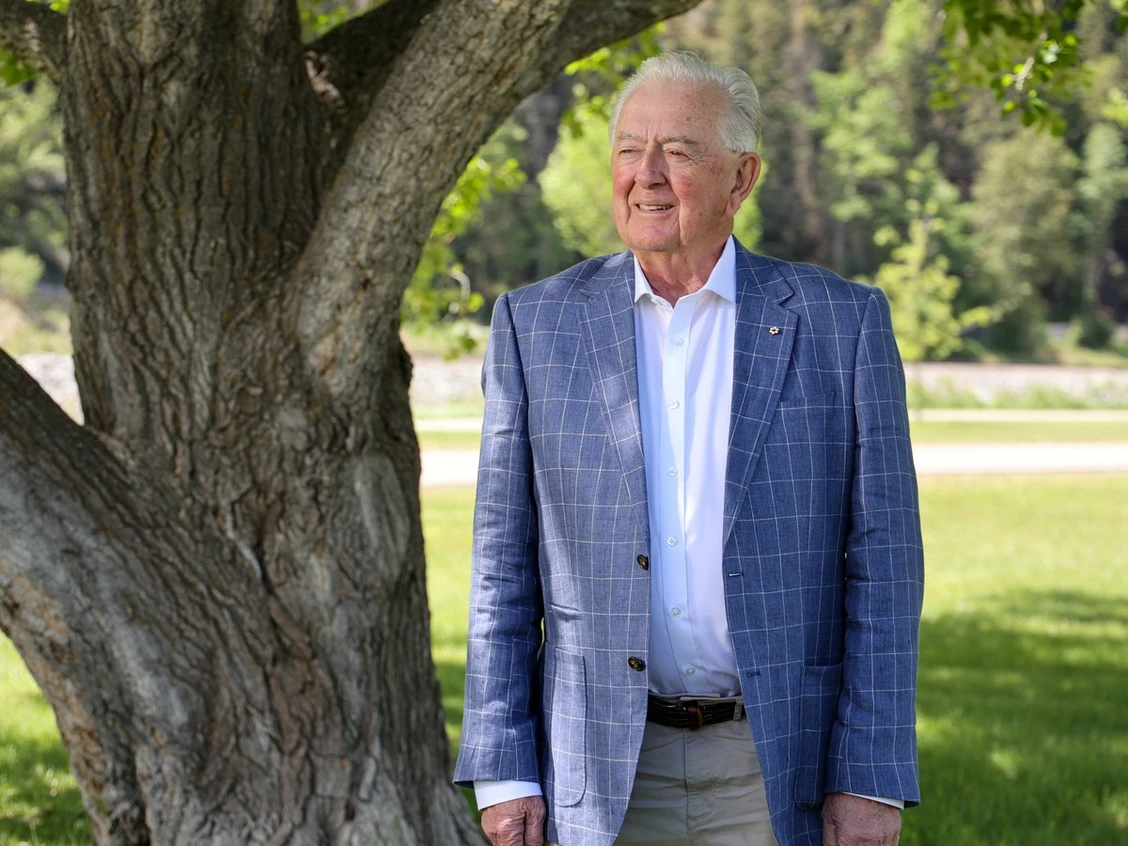
OTTAWA — On the eve of the 1995 referendum vote in Quebec, Preston Manning rose in the House of Commons to ask the Liberal government of the day how it might be willing to change to convince a “soft sovereigntist or a discontented federalist” to vote against leaving the country.
Article content
More than three decades later, the former Reform party leader is asking the same question, this time about Alberta.
Article content
Article content
Article content
“The question with respect to remain is: remain and do what?” he told National Post in an interview on Tuesday.
Article content
Article content
“That’s the question that the remain people have to answer.”
Article content
Alberta Premier Danielle Smith has scheduled a referendum for October, asking Albertans whether they wish to remain a part of Canada or begin the process of holding a binding referendum on leaving the country. Manning, now into his 80s, says he plans to vote to remain in Canada and believes that side will ultimately prevail
Article content
But for the man behind the populist political force that was the Reform party, which was born out of the discontent and anger that brewed to new heights across Western Canada in the 1980s, the period that saw Alberta elect its first and only separatist member of the provincial legislature, he says his vote to remain is not an endorsement of the status quo.
Article content
In fact, far from it.
Article content
“It means remain and push this sovereignty option within the federation.”
Article content
While Manning’s days of elected politics may be far behind him, he remains revered as one of the greats among Canada’s political conservative class.
Article content
Article content
His former party’s cry of “The West wants in” has for some leaders within Alberta’s separatist movement become an example of a bygone attempt to remedy the longstanding frustrations Albertans have had about their place — and treatment — within the federation by Ottawa, arguing that the best, and perhaps only path left, is to leave.
Article content
Read More
- Conservative MPs are being asked to speak up on separatism. Some are louder than others
- Carney warns that push for Alberta separatism referendum could be ‘dangerous bluff’
Article content
For those looking to convince them otherwise or just move past October’s independence question in hopes of putting the question to bed, the former politician is not offering a declaration, but instead a query: “Move on to do what?”
Article content
Manning rails against thinking that suggests “the status quo is good enough” for those in Alberta.
Article content
In fact, he says he is reminded of office arguments he had with former prime minister Jean Chretien during the lead-up to the 1995 referendum in Quebec, where Manning’s Reform sat with the third highest number of seats in the House of Commons.
Article content
“His position was… guess what it was,” Manning says of Chretien, before taking a pause: “The status quo is good enough.”
Article content
“All you have to do is convince these Quebecers they’ve never had it so good and the federation is working fine, and all will be well,” he recalled of his conversations with the former prime minister.
Trending
- Is the Citizen restaurant critic out of touch with diners’ palates?
- Early retirement incentives to reduce department operating budgets
- Two new swimming docks coming to the Ottawa River this summer
- New Ottawa café makes decadent street food from Brazil
- Bank and Leitrim is a ‘mess’ and these residents can’t wait for its new design
Article content
“He was arguing this until about nine o’clock on the night of October 30, when all of a sudden you almost had a majority say no, it’s not good enough, and we want out.”
Article content
That leads Manning to offer some cautionary advice to today’s federalists about repeating the same position.
Article content
“This business of ‘the status quo is good enough’ as a default federalist position, no matter who takes it, I think is extremely unwise,” he says.
Article content
“Does nobody learn from that 1995 referendum and exercise, where that was the federal position?”
Article content
One alternative Manning champions is for the Carney government to repeal the suite of energy laws that have been the source of much consternation in Alberta, from the oil tanker ban off B.C.’s northwest coast to the Impact Assessment Act. He also wants the federal government to make it clear in legislation that Ottawa respects provincial sovereignty.
Article content
“There’s a number of other things the federal government could do if it wants to address the root cause of that alienation,” he says.
Article content
“Simply building a pipeline is not the complete answer.”
Article content
That pipeline is the one Smith’s government is hoping to attract a private sector proponent to build to the West Coast as part of a deal she struck with Carney, as both sought a reset in relations after years of acrimony under former prime minister Justin Trudeau.
Article content
Article content
Carney has also committed the federal government to amend parts of the oil tanker ban and cancel the planned oil and gas cap, two rollbacks out of other Trudeau-era climate reversals he has made that Smith has celebrated as progress, but which sent former environment minister Steven Guilbeault out the door.
Article content
Alberta’s premier, along with Saskatchewan Premier Scott Moe, whose province has seen waves of the same separatist sentiments as its Western neighbour, have both celebrated how they see Carney more willing to act cooperatively as a federal government than under Trudeau, who each warned that the former prime minister appeared uninterested in consultation.
Article content
Does nobody learn from that 1995 referendum and exercise?
Article content
Moe also told CTV News while attending last week’s western premiers meeting in Kananaskis that those issues were in the “rear view mirror” and that if people kept looking that way, “I think we’ll become increasingly frustrated.”
Article content
Manning applauds Smith for championing what he sees as a vision for sovereignty, not separation, but not everyone agrees. Fellow premiers, like Manitoba’s Wab Kinew, who used last week’s conference to urge Smith to hold off on any referendum, as well as Ontario Premier Doug Ford, who characterized putting an independence question on the ballot as Smith pandering to “30 per cent” of her base.
Article content
Article content
Manning points to the nine other questions Albertans will be voting on this fall, asking whether the province ought to take more control of immigration and work with others to amend the Constitution to allow for the ability to opt-out of programs in areas like health care, which are viewed as intrusions by the federal government into provinces.
Article content
As for how he believes separatists may respond should they lose October’s independence question — a possibility that separatist leader Keith Wilson predicted would split Smith’s United Conservative Party while on a debate stage in Calgary last week — Manning suggests those campaigning to leave will demand something “other than sermons on stop whining about the federation.”
Article content
“The onus would be on the pro-federalists to say, ‘OK, we can make this thing work within the federation.”
Article content
That, Manning says, is the problem he sees Alberta separation rooted in — one he knows a thing or two about.
Article content
“This is another symptom that federalism is not working the way it should, and that federalism needs to be reformed, to come back to an old theme,” he says, with a laugh.
Article content
National Post