 admin
admin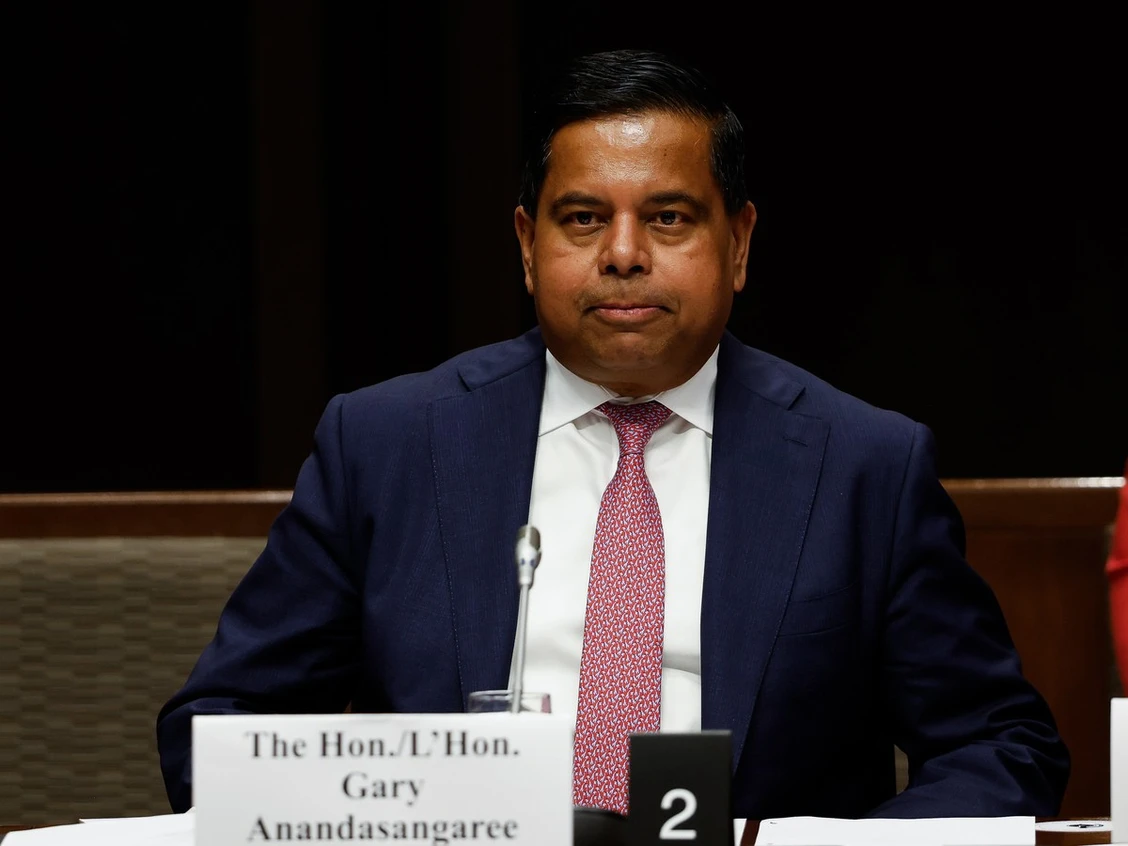
OTTAWA — The Conservatives are calling on the government to split its controversial lawful access bill, signalling they are willing to support some of the new tools for police and intelligence agencies to obtain Canadians’ information while further studying other more contentious proposals.
Article content
The Conservatives tabled a motion asking the House of Commons to split the legislation, known as Bill C-22, in two at the Public Safety Committee meeting Tuesday.
Article content
Article content
Article content
If the motion passes, it will send an official request to the House of Commons to split the bill into two separate bills C-22A and C-22B, which would then proceed through Parliament separately.
Article content
Article content
In return, Conservatives say they would support Bill C-22A to pass it before the summer recess but would push to further study and amend the second Bill C-22B.
Article content
“We as Conservatives were committed to seeing part one potentially become law before the summer adjournment, but part two raises some serious concerns for us,” Conservative MP Rhonda Kirkland told the committee. The meeting ended before other MPs could opine on the motion.
Article content
Bill C-22 aims to reform Canada’s lawful access regime, which regulates the most intrusive powers afforded to police and intelligence agencies. The new regime would make it easier for police and intelligence agencies to intercept private communications or personal data as part of their investigations.
Article content
The reform has faced fierce and growing pushback from opposition parties, tech giants, privacy and civil liberty groups, who argue it does not do enough to protect Canadians’ privacy.
Article content
Article content
C-22 is strongly supported by police services across Canada and CSIS, who argue that their investigations into serious crimes like extortion, terrorism or child sex abuse material are significantly hampered because of Canada’s lack of a modern lawful access regime.
Article content
Read More
- Public safety minister wants police search powers bill to become law by June 19
- Google tells MPs police search powers bill could ‘facilitate foreign interference’
Article content
The bill is divided into two parts. The first proposes that police and the Canadian Security Intelligence Service (CSIS) be able to approach telecommunications companies and ask them if, yes or no, an individual is a client before having to get a warrant. It then sets out a new path for authorities to obtain client information from the companies with the appropriate warrant.
Article content
This section would become Bill C-22A under the Conservative motion and is generally supported by opposition parties.
Article content
The second part of the current bill proposes new obligations to electronic service providers to organize and retain various types of client data — some for up to one year — in a way that makes it obtainable by law enforcement or CSIS with a warrant.
Article content
That means that if passed, the bill would compel electronic service providers to store and make information like device locations or cameras available to police or CSIS with the requisite warrant. That could be used to track a person’s live location in case they pose a threat to national security or are considered to be in danger, the government cited as examples.
Trending
- Is the Citizen restaurant critic out of touch with diners’ palates?
- Early retirement incentives to reduce department operating budgets
- Two new swimming docks coming to the Ottawa River this summer
- New Ottawa café makes decadent street food from Brazil
- Bank and Leitrim is a ‘mess’ and these residents can’t wait for its new design
Article content
That section of the bill in particular has been the focus of most criticism that it could force tech companies to undermine their encryption services or compel them to implement tracking or “mass surveillance” tools if the government requires it.
Article content
“There’s major government overreach, significant expansion of government authority, and I truly believe this bill needs further study if the committee is going to fix this,” Kirkland said of the current Bill C-22.
Article content
Public Safety Minister Gary Anandasangaree’s office did not immediately respond to questions on if he would support the move.