 admin
admin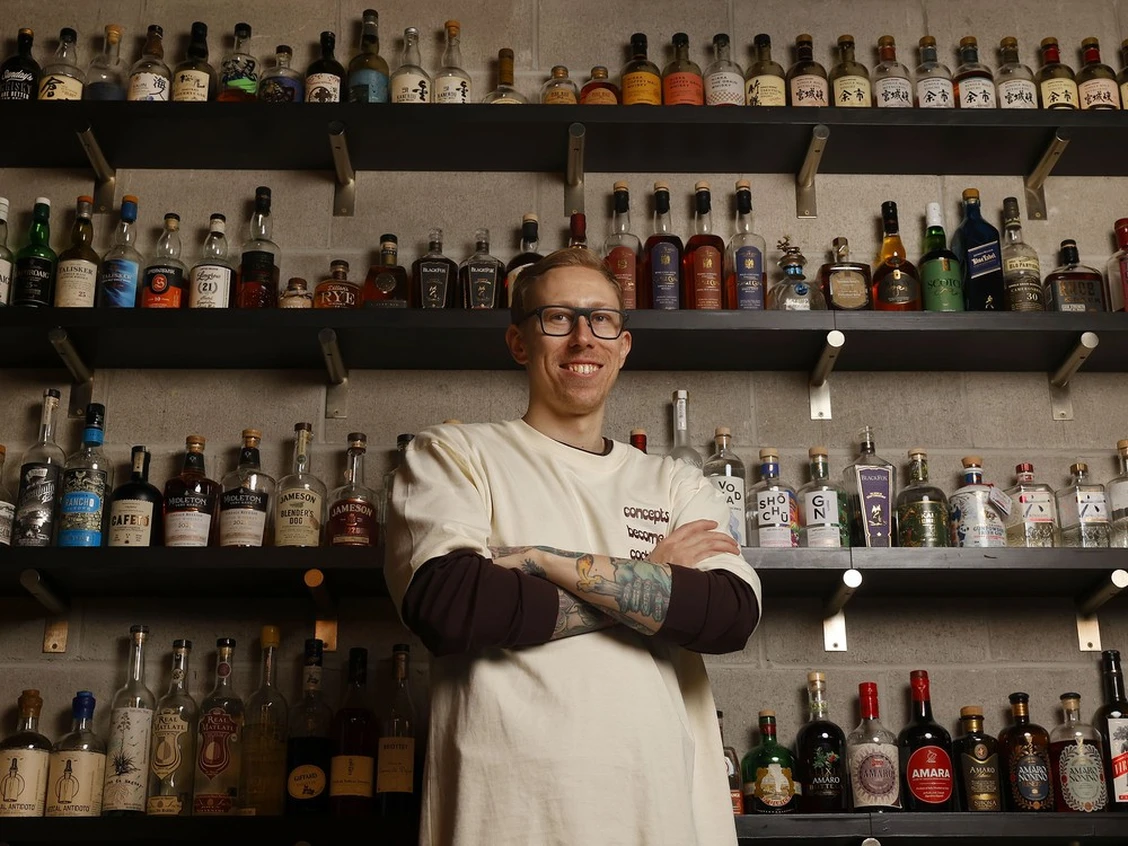
When Mike Campbell and his partners opened a cocktail bar on Sparks Street, they knew they weren’t going to convert Ottawa into a late-night party city.
Article content
After all, in a government town filled with people who have to report to work first thing in the morning, an 11 p.m. happy hour and a kitchen open past midnight might not be considered big attractions.
Article content
Article content
However, in its four years of existence, a surprising thing happened at the tiny, 20-seat bar they named Stolen Goods: It thrived, building a community of regulars ranging from the “suits” of Parliament Hill to the shift workers of the downtown hospitality industry.
Article content
Article content
“We succeeded, but not for the reasons we thought we would,” said co-owner Campbell, a 31-year-old mixologist who predicted a niche clientele that would be drawn by the innovative cocktails and small plates.
Article content
Article content
Those customers came, to be sure, but more importantly, they became regulars. Despite the urban barrens of Sparks Street after dark, the bar is usually packed, serving between 60 and 80 people a night.
Article content
“We found that the personal connection and the relationship-building that happens when you’re there every single day that you’re open really helps create a sense of community and a business that is very self-sustaining,” Campbell said, noting the bar was fortunate to catch the post-COVID pandemic wave of revellers returning to social activities.
Article content

Article content
“I mean, we haven’t had to do any marketing in three years. We’re lucky we don’t have to push promotions or do things just to get people through the door. It’s just about taking care of people once they’re there, and then they come back.”
Article content
Adding to the appeal of Stolen Goods is its vibe as a modern speakeasy with a square footage of just 700 feet, a nondescript location amid office buildings, and a sign on the front not much bigger than a loaf of bread.
Article content
Article content
But things are changing at this hidden gem. The owners recently announced on social media that Stolen Goods would close at the end of 2026. “We intend to go out on a high,” they wrote, hinting at bigger and better things in the works.
Article content
Read More
- Where to find the best bars in Ottawa, from happy hour to last call
- Ottawa restaurant, gothic Italian speakeasy hidden behind a bookcase in the ByWard Market
Article content
When a bar in Ottawa closes, it’s often due to financial reasons. Not in this case. Campbell says the original business plan was to “see where we’re at” after five years.
Article content
The years have flown by, and what they’ve learned about running a cozy, mostly owner-operated bar is that it takes a lot of time and energy.
Article content
“It’s a great business model when you’re able to do it full-time with all of your efforts focused on it, but it doesn’t help when you’re wanting to expand and do other concepts,” Campbell said. “We found we would have to step back from being the full-time, day-to-day people to be able to create more things that we want to try.”
Article content
So what’s next? The owners are looking for space in the downtown core to launch a new bar, likely with a few more seats and similar values. “We hope we’re able to bring the community we have now into a bit of a bigger venture,” Campbell said of the new chapter, highlighting their commitment to paying staff a living wage.
Trending
- Is the Citizen restaurant critic out of touch with diners’ palates?
- Early retirement incentives to reduce department operating budgets
- New Ottawa café makes decadent street food from Brazil
- Bank and Leitrim is a ‘mess’ and these residents can’t wait for its new design
- Two new swimming docks coming to the Ottawa River this summer
Article content
Further details on the new endeavour have not yet been revealed, but in the meantime, other licensed nooks are carrying on the speakeasy tradition in Ottawa, including the Jackalope at Rabbit Hole, the Staffroom at Union 613, Tredici in the ByWard Market and Sidecar on Preston Street.
Article content

Article content
What is a speakeasy anyway?
Article content
The concept dates back to the prohibition era of the early 20th century, when the sale and consumption of alcohol was banned, explained Charlene Rooke, a Canadian spirits consultant and writer.
Article content
In Ontario, prohibition ran from 1916 to June 1, 1927, the day the first LCBO stores opened in Toronto.
Article content
“It was a time when bars went undercover for legal reasons,” Rooke said, describing secret entrances, cryptic passwords and other tricks designed to keep the illicit businesses under wraps. The term itself was coined by the necessity to be quiet, to “speak easy” while sipping in order to avoid causing a commotion that might alert authorities.
Article content
A contemporary twist on the speakeasy model started to take shape in the early 2000s in sync with the resurgence of craft cocktail culture, a movement widely attributed to the late, great New York City bartender Sasha Petraske.
Article content
Article content
Back then, speakeasys emerged partly as a way to shoehorn a bar into a dense NYC neighbourhood without causing disruption to residents, Rooke noted. The model has continued in the Big Apple, with hotspots like LouLou, where you enter through a vintage Coke machine, and Please Don’t Tell, which challenges would-be patrons to seek out a phone booth in an East Village hotdog shop to gain access.
Article content
Made with Flourish • Create a chart
Article content
How long has Ottawa had a speakeasy scene?
Article content
The modern speakeasy trend came to Canada more than a decade ago, initially taking root in Montreal, Toronto and Vancouver. One of the first to open in Ottawa was The Staffroom in the basement of the Somerset Street West restaurant Union 613. Its entrance is hidden behind a custom-made bookshelf.
Article content
Co-owner Ivan Gedz travelled to New York, Chicago and other cities to research the industry before opening Union 613 in 2012. He was intrigued by the clandestine nature of speakeasies.
Article content
“We knew that we wanted to be cocktail-focused and we loved the speakeasy culture in the States,” Gedz said. “We had the space and we just thought it was a cool idea, so we did it.”
Article content
Article content
Across from Stolen Goods is another bar that falls into the speakeasy category. The Jackalope is the elusive basement bar beneath Rabbit Hole, not to be confused with the adjacent basement room that’s part of Rabbit Hole.
Article content
“We call it going deeper down the Rabbit Hole,” beverages director Dylan Renaud quipped, describing the secret elevator and hidden wall that must be navigated to get to The Jackalope.
Article content
Both Jackalope and Staffroom specialize in creative, sometimes offbeat cocktails, along with seasonal specials, impressive wine lists and bespoke concoctions that start with a series of bartender questions.
Article content
“We ask a little bit about the kind of flavour profile you like,” Renaud said. “‘What’s your palette? What do you like? What don’t you like?’ And we create a custom drink just for you.
Article content
“It’s a fun challenge (for a bartender),” he added. “I think, when you make the same drinks over and over again, sometimes it’s nice to flex your creative muscles.”
Article content

Article content
What’s the allure of a speakeasy?
Article content
For the most part, the nightlife-consuming sector of the city has responded warmly to speakeasy culture, curious to try bold new flavours and old-fashioned classics in well-appointed rooms with vintage cachet.
Article content
“There are lots of adventurous people who will try new things,” Stolen Goods’ Campbell confirmed, especially on the drinks side of the menu.
Article content
“It’s easier to get them to give a drink a shot,” he noted. “With food, we’ve definitely realized there are boundaries in Ottawa and, if you cross them, some people might love it, but it’s probably not the best business decision.”
Article content
Take a seafood appetizer, for example. “People in Ottawa love a scallop or a salmon crudo. They don’t necessarily want to try a whitefish crudo or something like a sea snail,” Campbell said. “If you have a burrata on the menu, they will order it, no matter what you put on it.”
Article content
Why open a speakeasy in Ottawa?
Article content
In the end, the main reason a speakeasy-style bar does well in Ottawa is precisely because of its smaller footprint. If Stolen Goods was bigger, it would have been more of a struggle to make ends meet.
Article content
“We can fill 20 seats pretty easily,” Campbell said. “If we were a 60-seat venue doing the exact same thing, it would probably be a much tougher time.”
Article content
Although his team has a good foundation on which to build their next venture (or ventures), there’s also the challenge of current economic conditions, defined by rising costs and increasingly budget-conscious customers.
Article content
Article content
“We’re definitely seeing the economic climate is changing,” Campbell said. “People are still going out, but they’re spending less and they’re more picky about where they’re going or when they’re going.
Article content
“I think staying small is probably the way to do it right now.”